

Innovation: 20 lakh rupees were earned in just one year from the rice husk which was causing pollution by burning, know how.
Last Updated:
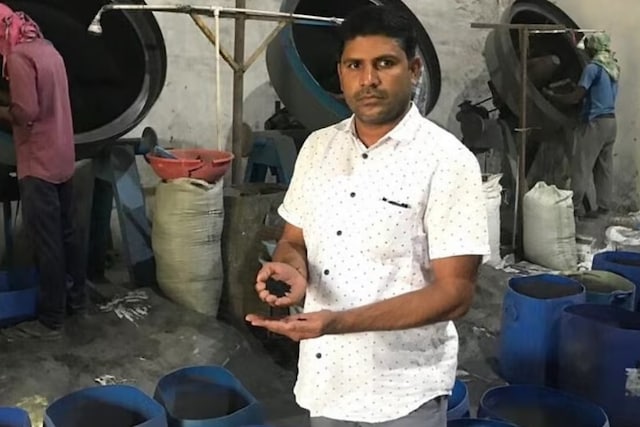
Bibhu was a teacher in Kalahandi, Odisha but in 2007 he left his job to do paddy business. Till now everything was fine but a new twist in his story came when he made an innovation. Due to this he started earning Rs 20 lakh annually. Bibhu turned rice husk into “black gold”.
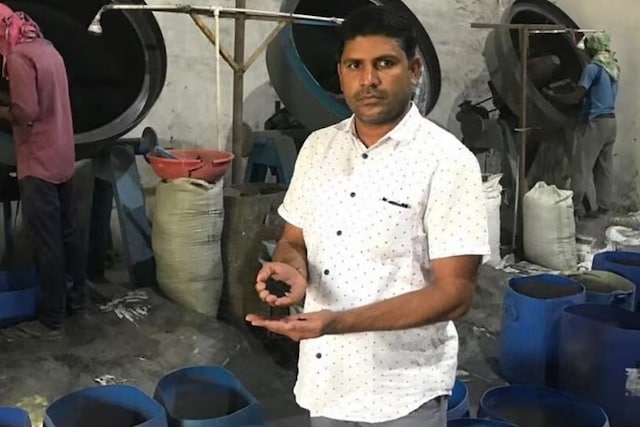 Vibhu converting rice husk into silica gel in his mill. (Photo Credited: The Better India)
New Delhi. This is the story of Bibhu Sahu. But it is a little different from other stories. Bibhu is from Kalahandi in Odisha which was in news for some time due to starvation. Bibhu was a teacher in the same Kalahandi but in 2007 he left his job to do paddy business. Till now everything was fine but a new twist in his story came when he made an innovation and started earning Rs 20 lakh annually from it. The story of Bibhu, who converted rice husk into “black gold”, has been published by the website The Better India. Know from the words of Bibhu, owner of Haripriya Agro Industries, how he converted the rice husk, which was wasted in fire, into a source of income…
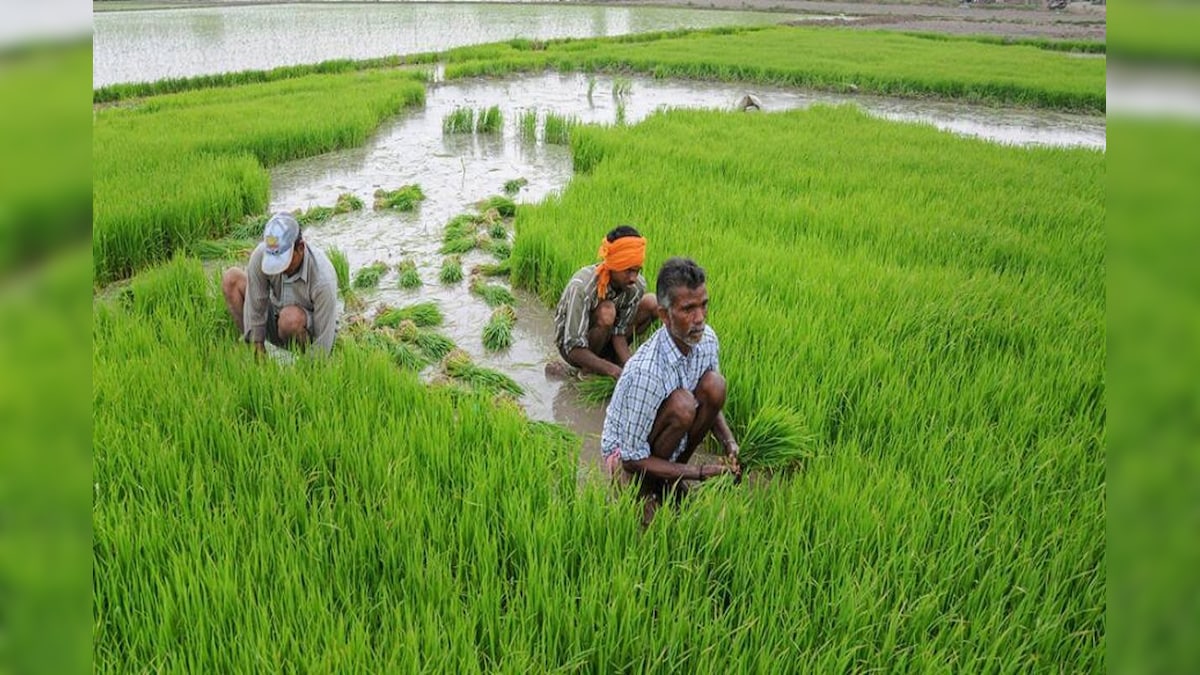
“Kalahandi is the second largest producer of rice in Odisha. About 50 lakh quintals of paddy is cultivated here every year. After the paddy business, I also decided to enter into the rice mill business in the year 2014. There are dozens of para blowing companies here, which treat rice. This leads to the production of husk on a large scale. Only in my mill, about 3 tonnes of husk is produced every day. Here generally, the husk is dried in an open It used to be thrown in the air and it caused a lot of harm to the environment. Seeing the increasing complaints from the people, we started storing the husk in the warehouse.
Couldn’t understand anything. Then, I did a little research. I learned that rice husk can be used as a thermal insulator in the steel industry. It contains 85% silica. Therefore this steel is very good for use in refractors. In this way, when burnt chaff is used in the boiler, it does not cause much pollution due to the high temperature.
Research was done but the real problem was its implementation. Then I somehow raised money and also visited an Egyptian steel company. Gave my proposal to that company along with a sample. He showed his interest and asked if it could be made available to him in powder form. I said it would be difficult because it could blow away in the wind. Then, after much discussion, it was decided that the husk would be converted into a pellet and exported.
I had talked to the company but a new challenge emerged. I didn’t know how to make a pill from it. That’s why I called experts from many states like Maharashtra, Gujarat, West Bengal. But, there was no result. A poultry farm was also contacted to understand the process of making pellets. But, this effort also went in vain.
For the next few months, I devoted all my resources solely to research. I felt that my concept was not practical and I almost gave up. But, at the same time, one of my staff asked for some time to resolve it. After this, he went to his village and came back with four people. Then, with their help we did some experiments and we succeeded. Initially it took a few weeks to get the pallets in the right shape. Our pellets ranged in size from 1mm to 10mm. Now to arrange this consignment, I wrote emails to companies in France, Germany, Italy, South Korea, Australia, Taiwan and United Kingdom. Finally, our first consignment went to Saudi Arabia in 2019.
The companies liked this product because the pellets burned very well. Also, they were quite cheap and their quality was good. In the year 2019, I earned Rs 20 lakh by selling 100 tonnes of pellets. In this way, we turned chaff into black gold.