

Car stopped while moving? Jump-start like this, mechanic expenses will be saved
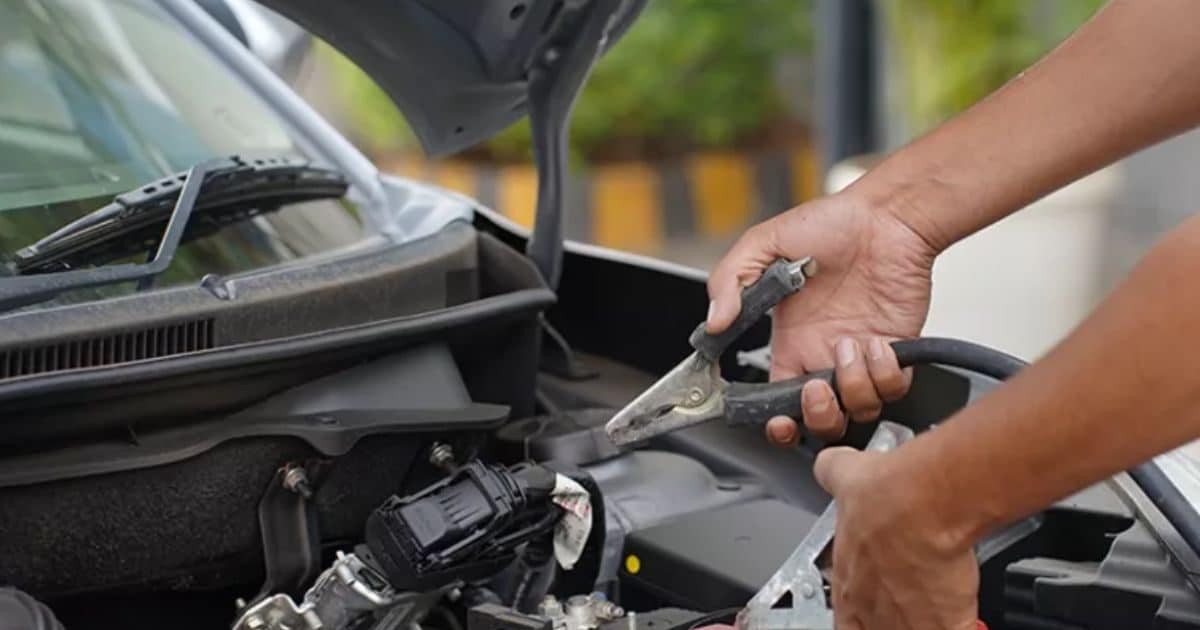
How to jump-start a car battery: Jump-starting a car battery is a very important skill. This becomes especially necessary when you suddenly get stuck on the road and the battery gets discharged. This problem mostly occurs in winters, when the vehicle is not driven for a long time or when lights, AC etc. are not switched off.
Jump-starting allows you to transfer charge to your car’s battery with the help of another car and start the car. This process is easy, but caution is very important because if done incorrectly, there can be a risk of short circuit, fire or battery explosion. Always give priority to safety. In this guide we’ll walk you through step-by-step how to safely jump-start a car battery.
collect essential items
First of all collect the necessary items. It requires a pair of good quality jumper cables and another car whose battery is fully charged. Park both the cars very close to each other, but do not let the bumpers or any part touch. Switch off the ignition of both the cars completely, apply parking brake and switch off all lights, AC, radio etc. Now let’s look at the step-by-step process.
step 1: Open the bonnet of both the cars and locate the battery. In most cars the battery is in the front of the engine bay. There are two terminals on the battery – positive (+) which is marked with ‘+’ and negative (-) which is marked with ‘-‘. Clean the terminals if there is rust or dirt on them.
Step-2: Connect the jumper cables in the correct order
- First of all connect the red clamp to the positive (+) terminal of the dead battery.
- Now connect the other red clamp of the same cable to the positive (+) terminal of the good (charged) battery.
- Then connect the black clamp to the negative (-) terminal of the good battery.
- Connect the last black clamp to any unpainted metal part of the dead car. Such as engine block, bracket or chassis.
Step 3: Now start the good car and let it run idle (without pressing the accelerator) for 2-5 minutes. This will transfer the charge to the dead battery. If necessary, you can press the accelerator lightly and keep it up to 2000 RPM.
Step 4: Now try to start the dead car. If it starts, great! Leave both the cars running for 5-10 minutes, so that the dead battery gets a good charge.
Step 5: reverse the disconnecting order
- First remove the black clamp from the metal part of the dead car.
- Then remove the black clamp from negative (-) of the good battery.
- Now remove the red clamp from positive (+) of the good battery.
- Finally, remove the red clamp from the positive (+) of the dead battery.
Step 6: Leave the dead car running or driving for at least 20-30 minutes so that the alternator can fully charge the battery. In this way you can start your car yourself and avoid calling expensive mechanics. If the battery is discharging again and again, get it checked by a mechanic. This could be the alternator, battery or any parasitic drain.